
Houston Google Ads Agency for Travel Agencies That Want Better Leads
If you run a travel business, you do not need more traffic. This sounds counterintuitive. You actually need more qualified clicks from people actively researching destinations, tours, packages, and travel planning services with an intent to purchase.
That is where smart travel PPC comes in.
A strong PPC strategy for tourism brands helps you show up when intent is high. When you’re running ads and paying per click on Google Ads or Facebook/Instagram, volume gets expensive. You want precise targeting to control spend, and visibility into what users are doing on your page so you can tweak and test layouts and offers to generate more inquiries and calls.
Great results rarely come from one platform alone. The best campaigns improve faster when PPC data is stacked with stronger landing pages, better conversion tracking, and SEO insights. PPC can bring people in at the research phase, or focus entirely on showing ads to people who came to your page but didn’t contact you.
We help travel and tourism companies build paid search campaigns that do more than generate clicks. We build systems that create measurable growth. And you gain complete visibility into how well your digital marketing is driving leads and revenue.

Is it too good to be true? Not at all!
We’re here to show you how to turn your business goals into reality by helping you build a full-funnel digital marketing, Google Ads, and PPC strategy for your travel industry business. Integrating multiple channels to attract, engage, and convert globetrotters, vacation planners, and adventure seekers.
A Houston Google Ads Agency for Travel Agencies That Need Clarity, Not Guesswork
You should be able to understand what your Google Ads budget is buying, which campaigns are driving qualified leads, and where your funnel is leaking. We help travel businesses fix bad tracking, weak keyword strategy, thin landing pages, and broad targeting to improve lead quality and cost efficiency.
Reach out today for a free initial consultation — no pressure, just proven expertise.

PPC Management for Travel Agencies, Tour Operators, and Travel Brands
Our clear processes and proven strategies make us one of Houston’s top-performing marketing agencies, delivering measurable results for our clients time and time again.
Most travel businesses do not have a traffic problem. They have a targeting problem, a tracking problem, or a landing-page problem.
The work starts with Google Ads because that is where high-intent demand shows up first. People search for destination specialists, tours, group travel planning, honeymoon packages, cruise planning, and travel help when they are already evaluating options. Our job is to structure your campaigns so those searches turn into qualified leads instead of expensive noise.
That means tighter keyword groupings, better negative keywords, stronger ad copy, location-aware targeting, cleaner conversion tracking, and landing pages that make it easier for the right people to contact you.
Sounds simple, right?
But here’s the catch: if your results aren’t measurable, they aren’t meaningful.
That is why we do not treat PPC as an isolated traffic source. We use campaign data to improve landing pages, strengthen SEO strategy, refine audience targeting, and increase conversion efficiency across the funnel.
Can you confidently answer these questions about your current digital marketing efforts?
- How many organic visitors did your website get from Google last month?
- What’s your cost per qualified lead from Google Ads?
- What’s your website’s conversion rate?

If those questions caught you off guard, you’re not alone — and that’s completely okay.
Our team is here to walk you through every step, making the numbers and strategy easy to understand. While we’re a digital marketing agency, we’re also a data agency. That means we don’t just launch campaigns; we help you make sense of what’s working, what’s not, and why. The result? A fully customized, high-performing strategy built around your business goals.
Better Lead Quality Starts with Better Tracking and Better Landing Pages
Trackable KPIs
Bad data makes good ad decisions impossible.
One of the first things we check in travel Google Ads accounts is whether the account is measuring the right actions. Too many agencies double-count conversions, track low-value events as leads, or fail to connect ad traffic to actual qualified inquiries and bookings.
For travel agencies, that usually means fixing:
– form submission tracking
– call tracking
– landing-page conversion tracking
– remarketing audience quality
– qualified lead definitions
– offline conversion feedback when available
To truly understand how your marketing efforts are driving growth, it’s also important to focus on digital-specific KPIs like:
- Number of website visitors by channel
- Costs pers by channel:
- Cost per website visitor
- Cost per lead
- Cost per qualified lead
- Cost per conversion
Data Fidelity
Most marketing agencies overlook the importance of clean, accurate data. We’ve taken over campaigns from other agencies and freelancers only to find serious tracking issues, such as:
- Double-counting conversions, inflating results
- Tracking actions that don’t reflect real leads
- Failing to track the full customer journey, making it impossible to spot where potential clients drop off in the funnel
At The Houston Marketing Agency, we prioritize data accuracy from the start. Our goal is to ensure every metric we track directly supports your digital marketing strategy and provides a clear, honest view of performance.
Phase 2: Maximize Affordable Inbound Traffic
PPC is essential for travel businesses. But to truly maximize your campaign’s impact, it’s crucial to understand why people are searching for travel services in the first place.
When you know what motivates your audience you can tailor your PPC strategy to meet those specific needs. Whether it’s planning a dream vacation, booking a group tour, or comparing travel packages, the focus helps drive more qualified traffic to your website while keeping costs down and results high.
Google has become the go-to source for anyone looking for information. “Just Google it” is now shorthand for finding answers to just about anything.
That’s why analyzing Google data is one of the smartest places to begin when building a digital marketing strategy. It offers valuable insights into how your audience searches, what they’re looking for, and how to position your travel business to meet them there.
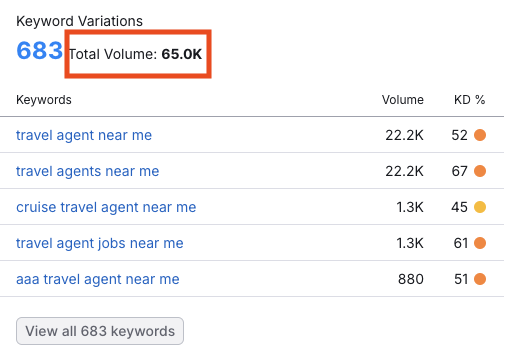
This data shows that 65,000 users per month have been searching for travel agents near them (or some variation of that term). That’s 780,000 people each year!
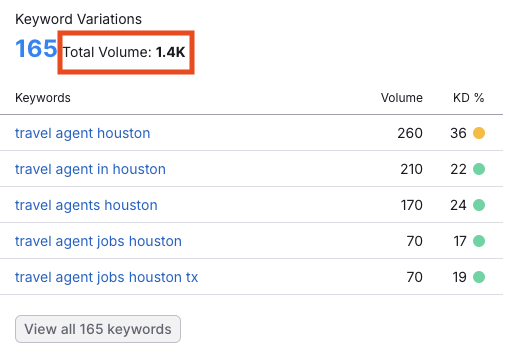
For those searching more locally, as with the term “travel agent Houston,” the results are still impressive. 1,400 potential clients are looking for someone like you every month.
Why is this important?
If your travel business isn’t showing up in both organic and paid search results, you’re missing valuable opportunities to connect with potential customers, many of whom are actively searching for the services you offer.
Organic
There are two key spots where you can earn organic visibility on Google for keywords like “travel agencies near me.”
The first is the Google Local Pack, the map-based section that highlights top local businesses related to the search.
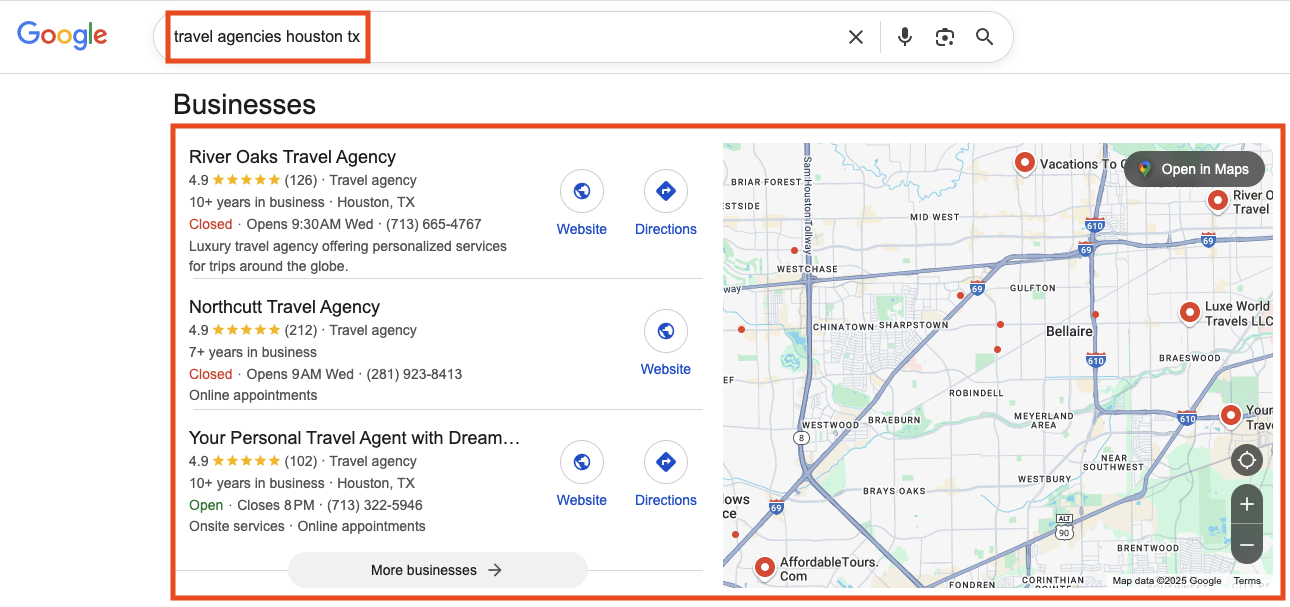
So, how can you get your travel business to appear in the Google Local Pack?
In short, local SEO involves many behind-the-scenes elements, but the foundation comes down to a few key steps:
- Build a website with rich, location-specific content.
- Optimize your Google Business Profile and earn strong, consistent reviews.
Just below the Google Local Pack, you’ll find the standard organic search results — another crucial place to capture visibility and clicks.
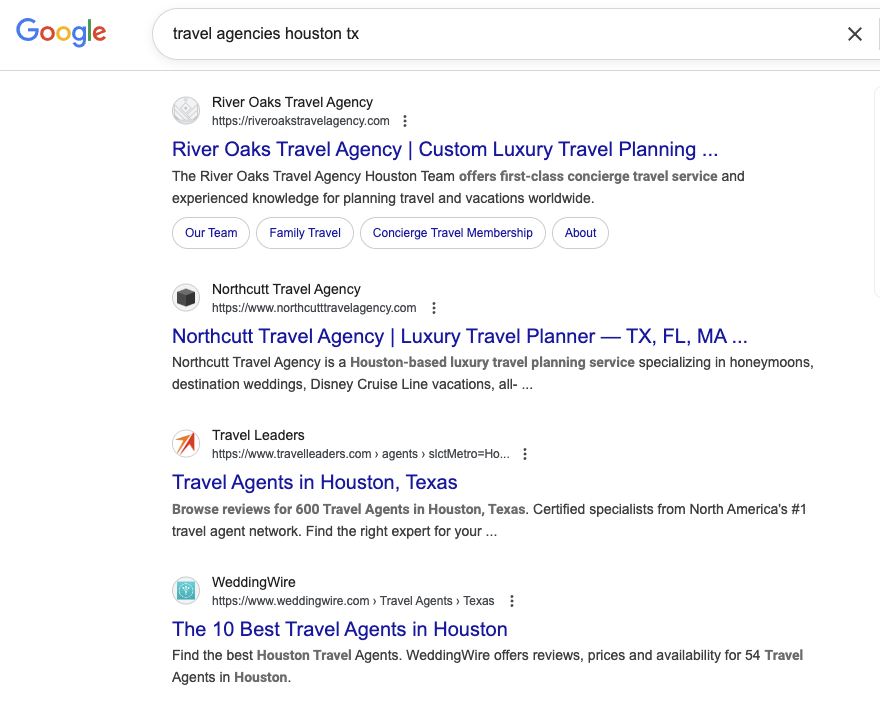
And how can you get your travel business to rank in the top organic search results?
We know it sounds repetitive, but SEO is a layered, complex process. However, you can begin with a few foundational steps:
- Build a content-rich, informative website that answers your audience’s key travel questions.
- Optimize your on-page SEO. This includes title tags, meta descriptions, header structure, and keyword usage throughout your pages.
How Google Ads Works with CRO, SEO, Email, and Remarketing
Google Ads is usually the first lever because it captures demand that already exists. Once the account is generating useful search-term and conversion data, we use those insights to improve landing pages, remarketing, SEO content, and follow-up systems like email.
That does not mean other channels are irrelevant. It means they work better when the account already has clear signal, strong tracking, and a clearer understanding of what the market actually responds to.
That is why we do not manage Google Ads in isolation. We use search-term data to sharpen messaging, landing-page behavior to improve conversion rates, and follow-up systems like email and remarketing to recover interest that would otherwise be lost. Google Ads is the entry point. Better marketing performance comes from improving what happens after the click.
Search term data can shape SEO content. Landing page tests can improve conversion rates. Audience behavior can sharpen remarketing and offer strategy. By integrating these pieces together, PPC becomes far more efficient and more profitable.
Paid
Not all paid advertising channels deliver the same results, and their effectiveness depends on your travel business, target audience, location, and a variety of other factors.
As you plan your digital marketing budget, there are several key platforms where you might consider investing your resources.
Google Ads for Travel and Tourism Campaigns
Google Ads are paid placements that appear at the top of the search results page, marked with a “sponsored” label.
When managed effectively, these ads put your travel business in front of the right audience, prompting clicks to your website and increasing the chances of converting those visitors into customers.
It’s important to remember that not all Google Ads work the same way. As your travel industry digital marketing agency, we can test and optimize different ad formats to see what delivers the best results. Some of the main types include:
- Search Ads
- Display Ads
- Performance Max Campaigns
- And more
YouTube Ads
YouTube is a powerful platform for travel agents and professionals to spark wanderlust and build trust with potential customers. Through well-crafted videos, you can give viewers an immersive preview of the experiences you offer — whether it’s a guided tour of a luxury cruise ship, a walk-through of an all-inclusive resort, or a day-in-the-life at a popular destination.
Video content doesn’t just entertain, it also inspires action. A behind-the-scenes look at a safari adventure, footage from a group tour in Europe, or a “what to pack” video for a tropical getaway can answer key questions and ease travel anxiety, all while showcasing your expertise.
When people can see what their trip might look like, they’re far more likely to take the next step, whether that’s subscribing, reaching out, or booking with confidence.
Facebook, Instagram, and TikTok Ads
Social media advertising is one of the most effective ways for travel agents and professionals to connect with future clients across different age groups and travel interests. Platforms like Facebook, Instagram, and TikTok allow you to deliver targeted, visually engaging ads that speak directly to your audience’s dreams and travel goals.
Facebook is ideal for reaching older and mid-range demographics. Think families planning vacations, retirees booking cruises, or couples looking for honeymoon destinations. Its powerful targeting tools let you zero in on users based on location, interests, and even recent travel behavior.
Instagram, known for its aesthetic appeal, is perfect for showcasing stunning destination photos, behind-the-scenes stories, and short-form video reels. It attracts a wide age range but is especially popular with Millennials and Gen Z travelers who are inspired by curated travel content.
TikTok, while dominated by younger audiences, is quickly becoming a platform where all generations seek out fun, informative, and viral travel videos. From quick destination highlights to day-in-the-life itineraries, TikTok ads are a great way to inject personality into your brand and spark curiosity.
By using each platform strategically, you can reach a wide range of potential travelers, whether they’re dreaming about their first big trip or looking for help planning their next adventure.
Phase 3: Increase Conversion Rates
Up to this point, we’ve focused on driving visitors to your website, which is a crucial first step! But attracting traffic is just the beginning.
The next challenge is turning those visitors into paying customers.
How do you make that happen? There are proven strategies and tactics you can use to boost conversions and turn interest into bookings.
Use CRO Best Practices
CRO, or conversion rate optimization, focuses on improving the percentage of website visitors who take a desired action, like booking a trip or submitting an inquiry.
Key elements of effective CRO include:
- Designing a website that’s easy to navigate and fully mobile-friendly
- Using high-quality, unique videos and images that capture the essence of your travel experiences
- Showcasing reviews and testimonials from happy customers who’ve booked through you
There are countless strategies to boost conversion rates, so we can’t cover them all here. However, these are some of the most effective techniques we regularly recommend that deliver strong results.
Split Test Landing Pages
The quickest way to find out if your website copy, design, or other on-page elements are boosting conversion rates is through split testing (also known as A/B testing).
Here’s the basic process:
- Landing Page A serves as the control—your original page.
- Landing Page B is the test version, where you change just one element from Landing Page A.
- For example, you might switch the call-to-action button text from “Contact Us” to “Schedule a Consultation.”
By comparing how each page performs, you can identify which changes attract more visitors and drive more conversions. Running regular split tests and adjusting your site accordingly can steadily improve your results over time.
Clear CTAs

When visitors land on your travel business’s website, they should encounter clear, compelling Calls to Action (CTAs) throughout every page.
For a travel agency or tour operator, these might include:
- Book a consultation
- Fill out a trip inquiry form
- Request a personalized itinerary
- And more
No matter what your specific process is, your CTAs should always be straightforward and easy to follow, guiding potential customers smoothly toward the next step.
Optimizing the Funnel
A visitor won’t instantly transform from a curious searcher into a customer ready to book their trip. Along the way, some users will drop off and decide not to move forward.
To understand exactly where these drop-offs occur and reduce them, follow these steps:
- Identify the key points in your customer journey where users are leaving.
- Use data-driven testing to optimize those drop-off areas.
- Continuously monitor how your changes impact performance.
- Keep testing and refining to improve conversions over time.
Increase LTV on Autopilot
Increasing the lifetime value (LTV) of your travel customers is a game-changer for building a sustainable, profitable business — and the best part is, much of it can be done on autopilot.

One powerful strategy is implementing email automation that nurtures your clients long after their initial booking. For example, you can set up automated email sequences that offer personalized trip recommendations, early access to exclusive deals, or reminders to book seasonal getaways. This keeps your brand top of mind and encourages repeat bookings without requiring constant manual outreach.
Beyond email, leveraging referral programs can amplify your customer base while rewarding loyal travelers. By incentivizing past clients to refer friends or family through discounts, travel credits, or exclusive perks, you create a steady stream of new leads generated by trusted word-of-mouth.
Additionally, you can stay connected through social media retargeting and personalized follow-ups, ensuring your customers feel valued and eager to plan their next adventure with you. Together, these automated approaches help maximize each customer’s lifetime value while freeing up your time to focus on delivering exceptional travel experiences.
Profitable Google Ads in the Tragvel Industry Doesn’t Have to Be Hard
We are based in Houston, and that matters more than most travel businesses think. You are not hiring a faceless offshore vendor to send templated reports once a month. You are working with a local Google Ads team that can explain what is happening in plain English, show you where budget is leaking, and help you make better decisions across the full funnel.
Many travel businesses start with Google Ads because they want a tactical fix. That is fine. But what they usually need next is stronger landing pages, better attribution, cleaner messaging, and smarter follow-up. That is where broader strategy becomes valuable.
We’re so confident in our approach that we offer a 100% refund if we don’t improve your performance within three months.
Get in touch with us today to start growing your travel business.